
How feet change between summer and autumn

Summer feet are a different shape to autumn feet.
Not bigger yet, but wider. Splayed, used to room, used to grip. After two months of sandals and bare feet on grass, a child's foot has spent more time spread out than packed in. Then the new school shoes arrive, and suddenly the foot is back inside a structure, often before anyone has checked whether it still fits the way it did in June.
This is the gap most parents miss. It is rarely about the size. It is about the shape.
What actually changes
Children's feet aren't finished. They develop with every leap, every stumble, every step. And the kind of movement a child does in summer is different to the kind they do during a school year.
Summer feet do more gripping. Toes spread. The arch works harder against uneven ground. Without a closed shoe holding it in a fixed position, the foot moves more naturally, and the tissues that support it stay more active.
Then term starts and closed shoes return. The foot spends seven hours a day inside something. If that something is the wrong shape, too narrow at the front, too high at the heel, too rigid through the middle, then the foot adapts to the shoe rather than the other way around.
By October, the splayed summer foot is gone. The shoe wins.
What this means before you buy
The temptation is to assume your child wears the same size they did before the summer. Sometimes that's true. Often the length is the same but the width or the shape has changed enough that last year's school shoes, or a fresh pair in the same style, won't fit properly.
Three things worth checking before September:
Toe spread. Look at your child's foot from above when they stand barefoot. The widest part should be across the toes, not the ball. If the toes are visibly fanned out, that is the working summer foot. A shoe that ends in a tapered toe box pulls those toes back in.
Heel-to-toe length. Measure from the back of the heel to the longest toe (often the second, not the big toe) with the child standing, and add 12–17 mm of growing room. Less than that and you'll be re-buying before half term. More and the heel slips, which brings problems of its own.
Side-to-side give. Press gently across the widest part of the foot. If the skin moves freely, the foot is splayed and active. A good school shoe gives that foot room to keep doing what it has been doing all summer. A narrow shoe shrinks the working surface.
Why shape, not just size
Most shoes get bigger. Ours change shape.
A two-year-old's foot is rounder, softer, almost circular at the front. A six-year-old's foot is longer and more angular, more clearly heel, arch, toe. A four-year-old who has been barefoot all summer sits somewhere in between, and probably closer to the rounder end than they were in June.
Sizing alone doesn't catch this. A shoe two sizes up from last year might still be the wrong shape for the foot inside it right now.
That's why the fit on a Tiny Dancers Play shifts across the size range: more room early on, a more shaped fit as children grow. Not a single template scaled up and down, but a fit that follows childhood.
Before school starts
You don't need to overthink it. A barefoot look on the kitchen floor, two minutes with a tape measure, and a willingness to size up if the shape says so covers most of the job. The rest is choosing a shoe built around the foot you find, not the one you assumed.
The point isn't that summer ruins shoes. It's that summer reminds you what a working foot looks like. Buy for that foot.


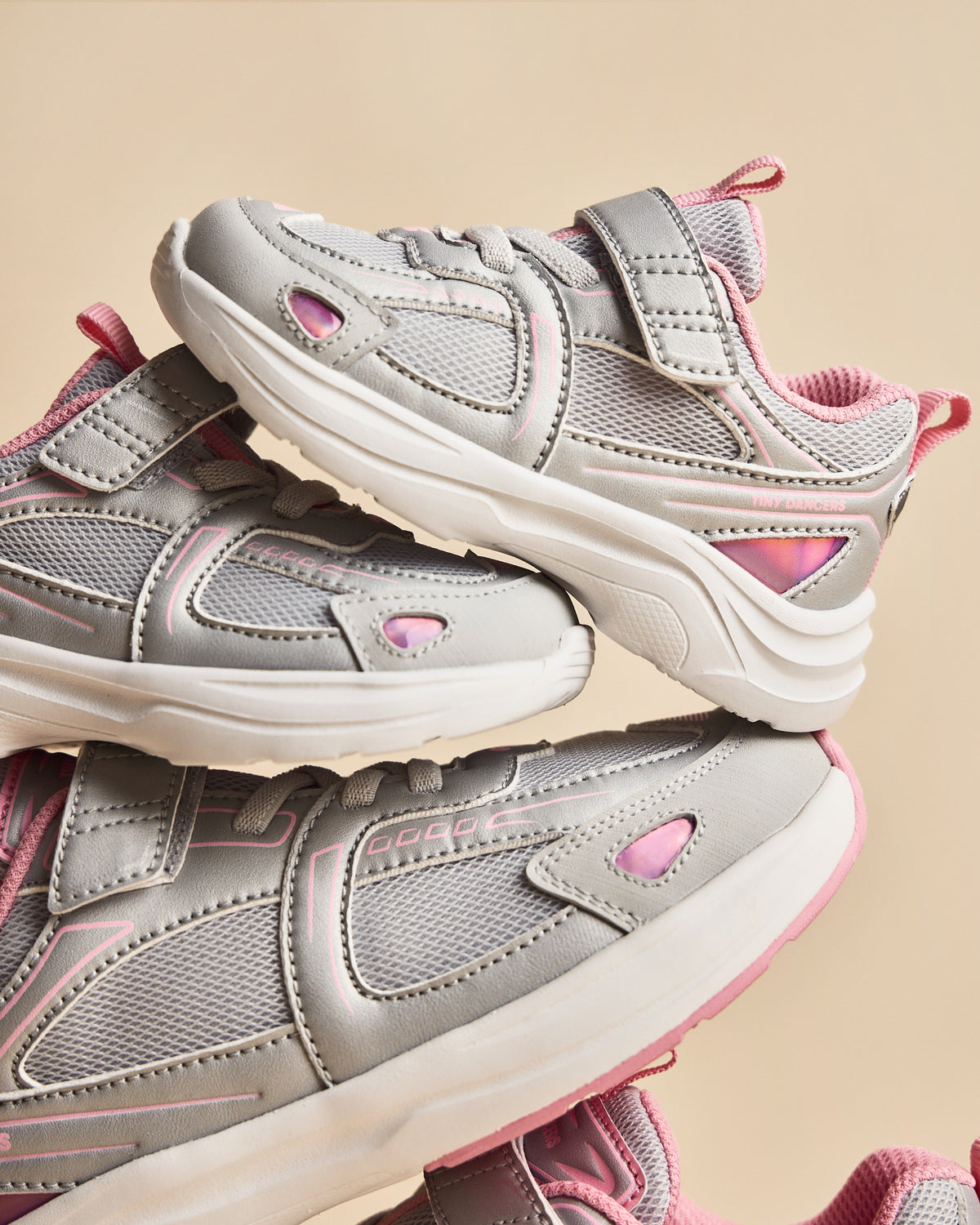
Built for the way kids actually move.
Every detail engineered for growing feet — not just scaled down from adult sizing.
Shop the collection