
The last two weeks before preschool and school

Two weeks is enough time, but only just.
The shoe your child puts on when term starts will do more walking than any other shoe they own. Five days a week, most of the waking day, on hard floors and soft floors, on playground tarmac and gym hall and wet grass. It will be on their feet during the hours that shape how they move for the rest of the day.
This is about using the two weeks well.
Week one: measure and order
Start with the foot, not the shop.
Measure using the method in how to measure your child's foot at home. Both feet, weight-bearing, in millimetres. Add 12–17 mm of growing room, and that number is what you're sizing to. If you'd rather skip the arithmetic, our size calculator takes the foot measurement and returns the size with the growing room already built in.
Then look at the foot itself: the outline, the toe spread, the shape of the front. After a summer of sandals and bare feet, your child's foot is probably wider and more splayed than the last pair of shoes was built for. The shape you find now is the shape that needs room to keep working.
Order this week rather than next. Most brands give fourteen days to return, which is not a luxury but roughly how long a child needs to tell you whether a shoe is right. Ordering early is what buys you a second attempt if the first pair is wrong.
Week two: try, walk, wear in
Put the shoes on in the morning and let your child wear them around the house properly, not for ten minutes. Up and down stairs, on carpet, on the kitchen floor. Then outside, on the pavement.
What to watch for:
- No red marks or pressure lines when the shoes come off
- Toes that move freely when you press the front of the shoe
- A heel that stays in place when they walk, with no slipping
- A bend point at the ball of the foot, not stiff through the middle and not floppy at the toe
- No complaints from the child about discomfort or wanting them off
If anything on that list fails, the shoe is wrong. Return it and try the next one, which is exactly why you ordered with time to spare.
If the shoes pass, spend the rest of the week wearing them in. On errands, at the park, at grandparents'. The first long day in a new shoe shouldn't be the first day of term. That's a lot of new for one morning, and a child's feedback about a shoe is more honest in the first few days than in the third week.
A well-built children's shoe doesn't need much breaking in, but the foot does need to get used to being inside a closed shoe again after a summer of openness.
What not to do
A few things parents reach for under time pressure that tend to backfire:
Don't buy two sizes up to grow into. A shoe that's too big causes the same problems as one that's too small. The foot slides around inside, the gait changes to compensate, and blisters follow. A correctly fitted shoe with 12–17 mm at the toe already contains the right amount of growing room.
Don't skip the shape question and add a half-size to last year. Summer changes feet, and so does growth. The foot you have in August is rarely the foot you had in June.
Don't buy a brand because an older sibling wore it. Feet vary between children in the same family as much as they vary between families, and the pair that suited one child tells you very little about the next.
Don't let comfort claims stand in for fit. Cushioning, gel inserts and memory foam are not substitutes for a shoe built around the shape of the foot. A flat sole and a foot-shaped front matter more than padding does.
The shoe that's about to do the most walking
Buy for the foot you measured on the kitchen floor this month, rather than the foot your child had in June or the one a generic size chart assumes they have.
That's the pair that will carry them through autumn.


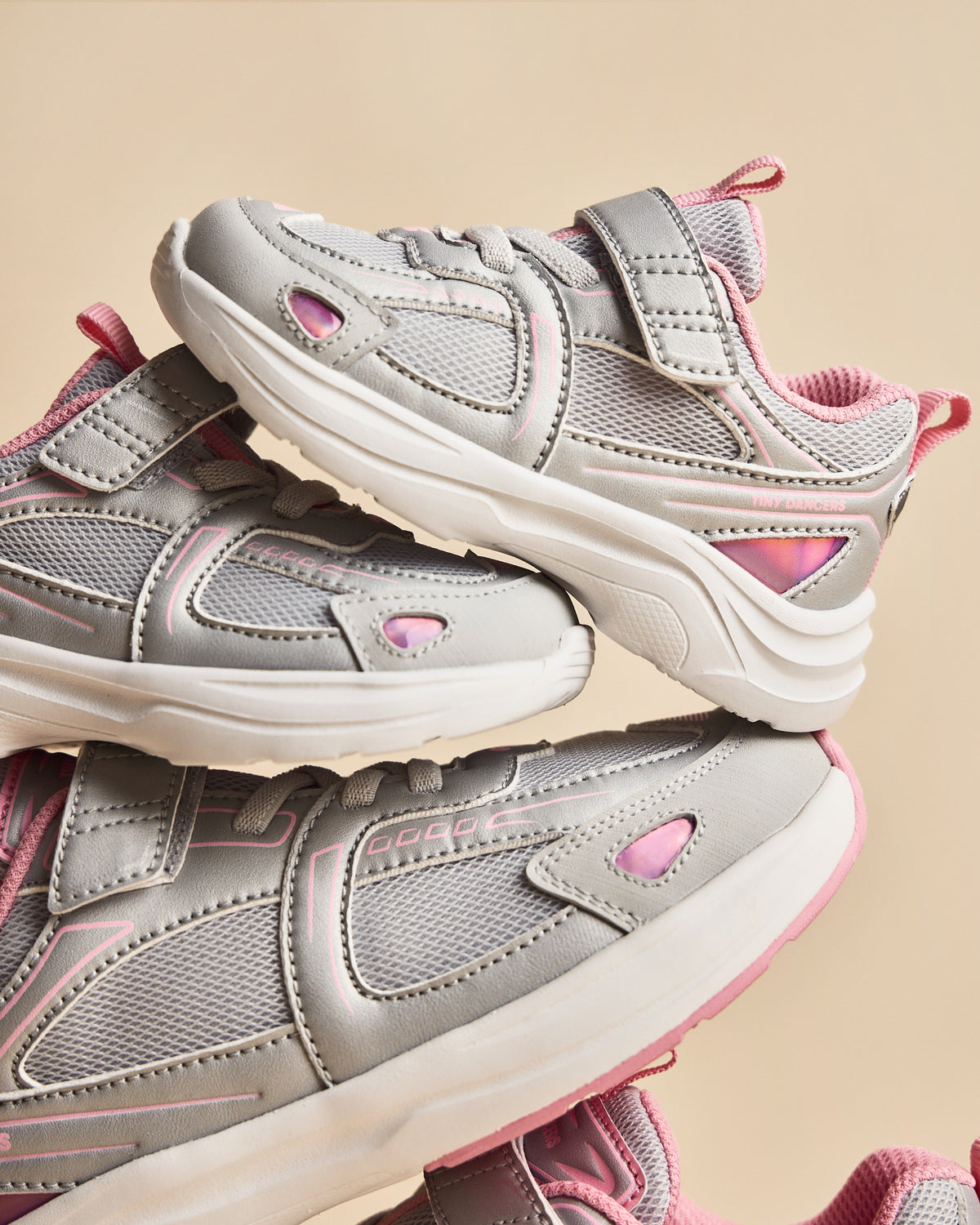
Built for the way kids actually move.
Every detail engineered for growing feet — not just scaled down from adult sizing.
Shop the collection