
How flexibility supports the way children move

In summer, a child is outside all day, moving from grass to pavement and back.
Children don't move in fixed patterns. Their movement changes constantly. One moment they're steady. The next they're adjusting. Turning, stopping, shifting direction. This kind of movement puts different demands on a shoe, on how it bends and gives.
A rigid shoe can work against it. It holds its shape, even when the foot is trying to move differently. That creates resistance, and movement feels more controlled than it needs to be.
Flexibility changes that. When the outsole can bend and move with the foot, the shoe becomes easier to wear. It follows the motion instead of resisting it.
This is especially important in everyday situations, not just during play, but throughout the entire day. Walking, stopping, changing pace, moving across different surfaces. The shoe needs to adapt to all of it.
At Tiny Dancers, flexibility is built into the construction of the outsole. Not to make the shoe soft, but to let it follow the foot. There's a balance between flexibility and stability, and too much of one can affect the other. That's why flexibility is considered alongside shape and fit. Together with TD Fit™, it allows the shoe to move more naturally with the foot, while still keeping a stable base underfoot.
The result is a shoe that doesn't get in the way of movement. It follows it.


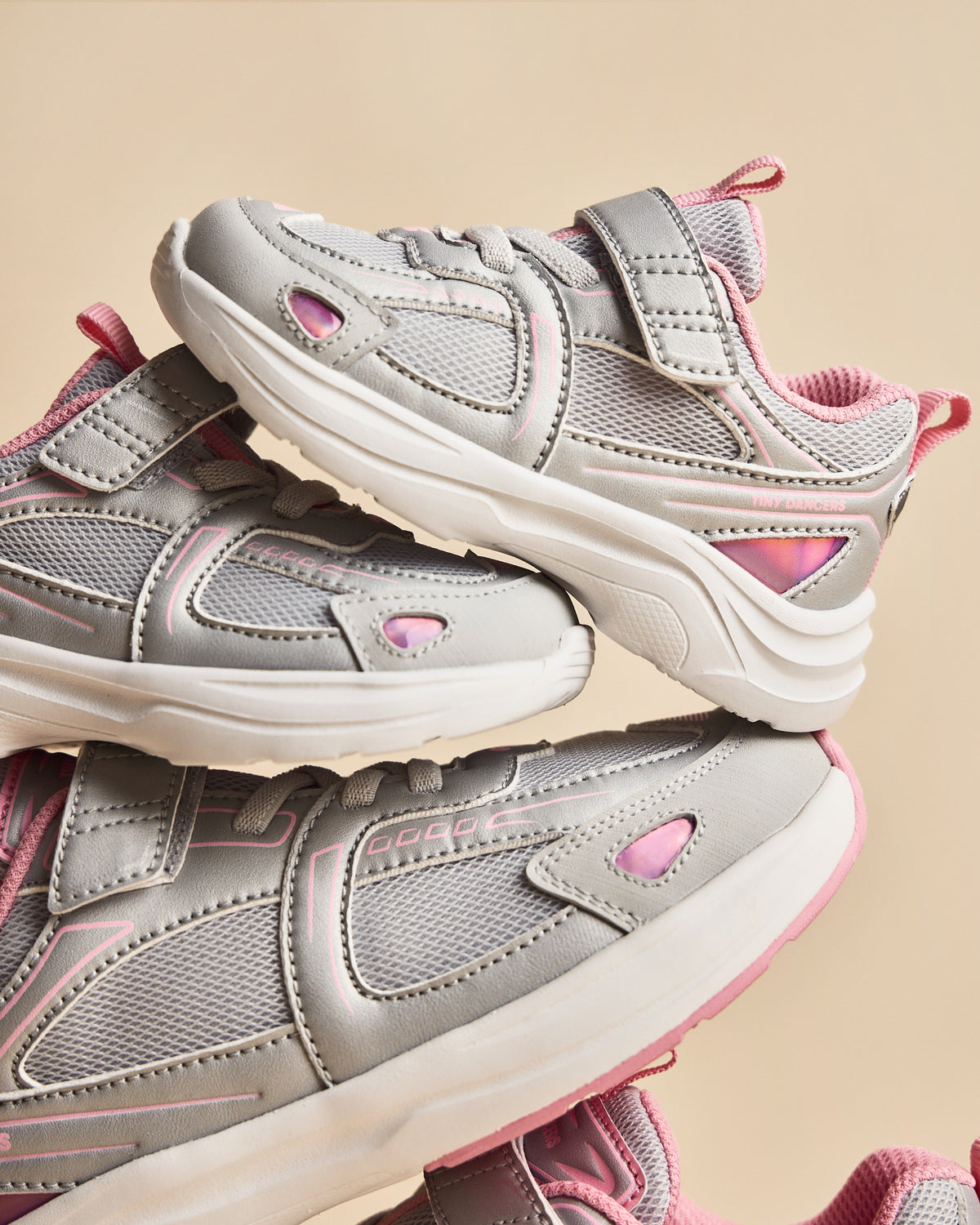
Built for the way kids actually move.
Every detail engineered for growing feet — not just scaled down from adult sizing.
Shop the collection